


For years, cinematic animation lived behind a locked door. You needed a studio-sized budget, a massive crew, years of production time, and access to tools most creators never touched.
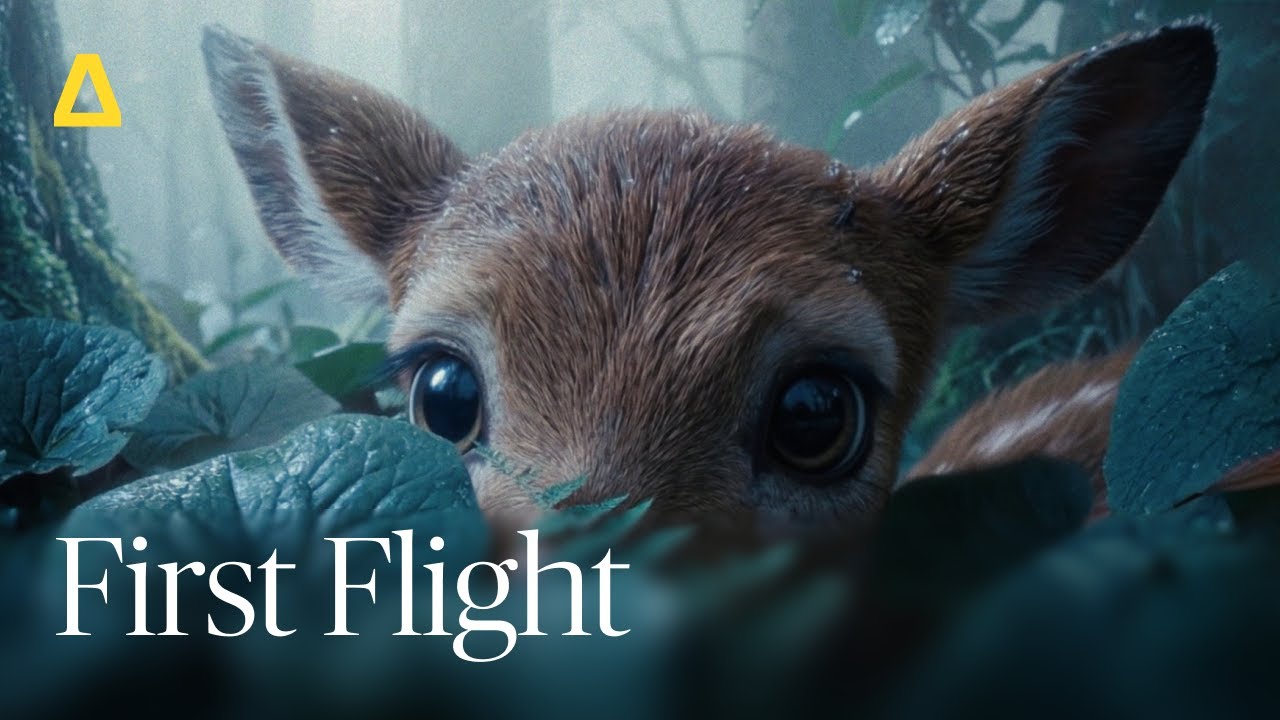
This Christmas holiday season, Artlist released a two-minute cinematic short film, First Flight. Made entirely with Artlist AI tools this video showcases a level of visual fidelity once reserved for Hollywood studios. This production wasn’t inspired by Pixar, but it is comparable to it.
A Hollywood benchmark — rewritten
Let’s put this into perspective.
| Project | Traditional high-end animation (think Pixar’s Piper) | The Artlist Christmas short |
| Cost | $2M–$5M budget | Under $3,000 |
| Crew | 40+ specialists | A three-person team |
| Time | Around three years of production | 30 days |
Both projects have the same emotional ambition and the same cinematic language, but a radically different pipeline. That contrast isn’t incremental. It’s structural.
What the film is — and why it works
The film opens with a glowing snowflake drifting through a winter sky, falling between trees before landing on the forehead of a young fawn, nestled between her mother’s legs.
From there, we follow the fawn’s journey to become something more.
She watches the herd gallop through the forest. She struggles to keep up — through mud, over fallen logs, across icy water. At one point, she looks into a frozen pool and imagines her antlers grown, glowing with the same light as the snowflake that chose her.
That moment changes everything. The snow keeps falling. The herd runs. Then they leap. And the fawn follows. Suddenly, they’re all airborne and flying.
The final shots pull back over a city at night. Two boys look up from their phones as Santa’s sleigh — pulled by reindeer, including the once-small fawn — crosses the sky.
The short ends with the message “This Christmas, create your own magic.”
It works because the story is clear, visual, and human. AI doesn’t replace the emotion. It delivers it.
Music that brings it to life
The short is accompanied by This Life of Time by Beò and Yuval Semo, available on Artlist, adding an emotional layer that elevates every scene. Music is an essential part of the cinematic experience, and this track perfectly complements the visual storytelling.
The modern AI pipeline behind the film
The team bypassed the traditional technical grind by designing a modern AI-first workflow:
- Kling 2.6 Pro and Kling O1 handled cinematic physics and realistic movement
- Nano Banana Pro delivered character consistency and expressive, emotional acting
Instead of armies of specialists, the team focused on creative direction, pacing, and story. Technology carried the weight that used to require entire departments. AI has shifted how we work for the better. These AI models are relocating craftsmanship and closing the gap.
The gap has officially closed
This film makes one thing clear, the visual gap between a big studio look and an independent creator’s vision is gone.
What still matters is the idea. The tools are no longer the bottleneck. The gatekeepers are no longer required. If you have a story today, you can start building it today.
Hollywood is already paying attention
This isn’t happening in isolation.
Coca-Cola’s 2025 global holiday campaign, “Refresh Your Holidays,” leaned heavily on generative AI to produce cinematic films celebrating behind-the-scenes holiday workers. The campaign included AI-reimagined versions of the iconic “The Holidays Are Coming” ad and used AI studios for the bulk of production. The emotion didn’t disappear. If anything, it sharpened.
Big brands aren’t experimenting anymore. They’re committing. Major studios see what’s coming. It’s only a matter of time before these tools become standard across high-end production. This moment marks the transition.
Why this moment matters for creators
The baby reindeer takes a leap of faith, and creators can, too.
This film isn’t about replacing studios. It’s about removing barriers. It proves that cinematic storytelling is no longer defined by budget size or team scale, but by clarity of vision and the willingness to use new tools well.
AI is the engine. Storytelling is still the soul. And for the first time, they’re fully accessible to independent creators.
This isn’t just a Christmas short. It’s a signal. The era of waiting for permission is over. Try it for yourself now on Artlist.
Did you find this article useful?


